
Marine Biologist Salary 2026: Median Pay, Hourly Rates & Career Growth
If you love the ocean and are wondering whether it can pay the bills, here is the short version: most marine biologists in the United States earn a solid middle class income, but the range is wide. According to the U.S. Bureau of Labor Statistics (BLS), the median annual wage for zoologists and wildlife biologists, the federal job category that includes most marine biologists, was $76,780 in May 2025, or about $36.91 per hour. This guide breaks down the marine biologist salary picture in detail, covering monthly pay, starting pay, experience levels, employers, states, and the education path into the field.
Marine Biologist Salary: Quick Answer
The typical marine biologist in the US earns around $76,780 a year. That works out to roughly $6,398 per month before taxes, or $36.91 per hour for full time work. New graduates usually start lower, often between $49,000 and $55,000, while senior researchers and federal scientists can pass $126,440. The marine biologist salary range is wide because the job spans aquariums, universities, government agencies, and private consulting firms, and each setting pays differently.
Pay at a Glance
The BLS does not publish a separate category for marine biologists alone. Instead, most are counted with zoologists and wildlife biologists (occupation code 19-1023), a group of roughly 18,000 to 19,500 workers. The figures below come from the BLS Occupational Employment and Wage Statistics release for May 2025, the latest official data available for 2026 guides.
| Pay Level | Annual Pay | Hourly Pay |
|---|---|---|
| Lowest 10 percent | Less than $49,100 | Less than $23.61 |
| Median (50th percentile) | $76,780 | $36.91 |
| Mean (average) | $83,020 | $39.91 |
| Highest 10 percent | More than $126,440 | More than $60.79 |
Source: U.S. Bureau of Labor Statistics, OEWS, May 2025, Zoologists and Wildlife Biologists. The mean sits above the median because a smaller group of senior specialists earns well into six figures, pulling the average up.
Monthly Pay Breakdown
Dividing the median annual wage by 12 gives an approximate monthly equivalent of about $6,398 before taxes. That is gross pay, not take home pay. After federal and state taxes, retirement contributions, and health insurance premiums, the amount that lands in a bank account is lower, and the exact gap depends on the state and the employer benefits package.
Monthly pay varies a lot by career stage. An entry level technician may take home the equivalent of roughly $4,000 to $4,600 a month in gross terms, while a senior federal researcher can exceed $10,000 a month in gross pay. Field roles sometimes add overtime, travel per diems, or seasonal bonuses, but these are not guaranteed and should not be counted as base salary.
Starting Salary for Marine Biologists
Fresh graduates should expect a modest start. Entry level roles such as biological technician, research assistant, or aquarium aquarist commonly pay between $40,000 and $55,000 a year. The BLS median for biological technicians, a frequent first title, was $57,510 in May 2025, which gives a realistic benchmark for the first job after a bachelor’s degree.
Starting pay is lowest in nonprofit conservation groups and seasonal field programs, and higher in private consulting and government technician roles. A paid internship, field course, or lab experience during college often makes the difference between a $42,000 offer and a $55,000 offer, because employers pay for skills they do not have to teach from scratch.
Pay by Experience Level
| Career Stage | Typical Annual Pay | What It Looks Like |
|---|---|---|
| Entry level (0 to 2 years) | $40,000 to $55,000 | Technician, field assistant, aquarist |
| Early career (3 to 5 years) | $55,000 to $70,000 | Research associate, junior scientist |
| Mid career (5 to 10 years) | $70,000 to $95,000 | Scientist, project lead, senior researcher |
| Senior (10+ years, often PhD) | $95,000 to $130,000+ | Principal scientist, lab director, federal senior researcher |
Experience pays in this field, but the degree matters just as much. A master’s degree typically adds $7,000 to $10,000 to the starting baseline, and a PhD is usually required for senior research roles and university faculty posts, where pay climbs highest.
Pay by Employer Type
Where you work shapes your paycheck more than almost anything else. The BLS reports the following median wages for zoologists and wildlife biologists by employer type:
| Employer Type | Median Annual Pay |
|---|---|
| Scientific and technical consulting services | $84,570 |
| Government | $78,650 |
| State colleges and universities | $78,630 |
Source: U.S. Bureau of Labor Statistics, Occupational Outlook Handbook, May 2025. Consulting firms tend to pay the most because clients fund environmental impact studies and offshore projects. Federal employers such as NOAA Fisheries and the U.S. Fish and Wildlife Service offer structured pay on the federal General Schedule scale, strong benefits, and stability; a posted NOAA Fisheries biologist role in California in 2025 advertised $69,107 to $133,236 depending on location and band. Conservation nonprofits usually pay the least, trading salary for mission driven work.
Pay by State
Marine jobs cluster on the coasts, and pay follows the research money. The top paying states for zoologists and wildlife biologists overall, from BLS state estimates for May 2025, are:
| State | Median Annual Pay |
|---|---|
| Maryland | $107,500 |
| District of Columbia | $107,050 |
| California | $98,530 |
| Alaska | $90,370 |
| Mississippi | $88,710 |
| United States overall | $76,780 |
Source: U.S. Bureau of Labor Statistics, OEWS state estimates, May 2025. Note that these figures cover all wildlife biologists, not only ocean specialists. Maryland and Washington, D.C. sit near major federal science agencies, while California benefits from research hubs in La Jolla, Monterey, and the Bay Area. High pay in California comes with a high cost of living, so the headline number stretches less far in San Diego or San Francisco than it would in Mississippi.
What Affects Marine Biologist Pay
Several factors explain why the marine biologist salary varies so much between two people in the same field. Education level is the first: a bachelor’s degree opens technician and aquarist roles, a master’s unlocks scientist posts, and a PhD opens senior research and faculty jobs. Specialization matters too, with marine mammal science, fisheries science, and marine biotechnology among the better paid niches.
Location, employer type, and funding source round out the list. Federal and consulting roles pay more than nonprofit roles. Coastal states with big research budgets pay more than inland states with few marine jobs. Finally, practical skills such as statistical analysis, GIS mapping, scientific diving certification, and grant writing can lift pay because they make a biologist useful on more projects.
What Does a Marine Biologist Do?
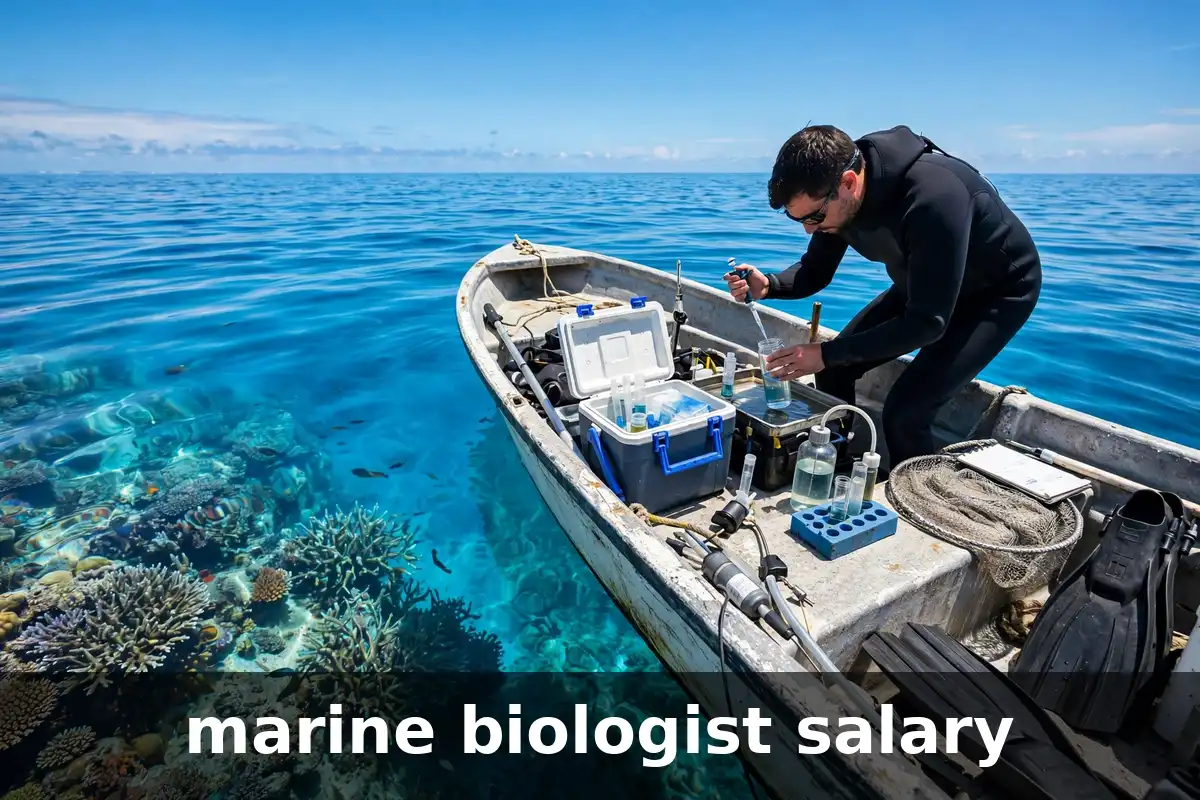
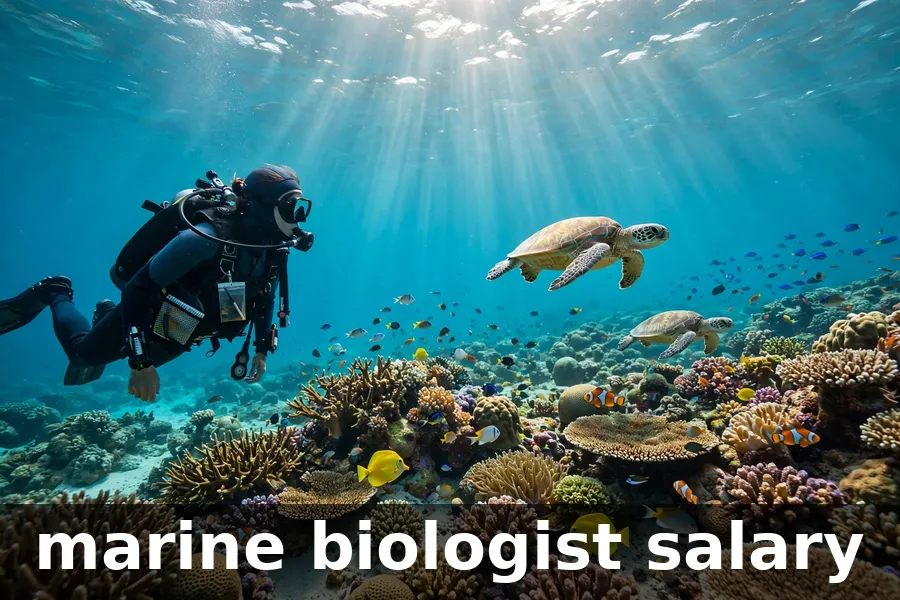
Marine biologists study ocean life and the ecosystems it depends on. Day to day work can mean collecting water and tissue samples at sea, running lab experiments, analyzing data, writing reports, and advising on conservation policy. Some spend weeks on research vessels, while others work mostly in labs, offices, or aquariums.
Common workplaces include universities, government agencies, aquariums and zoos, environmental consulting firms, fisheries, and biotechnology companies. The work suits people who enjoy fieldwork, data, and writing in roughly equal measure, and who are comfortable with irregular hours during field seasons.
How to Become a Marine Biologist
The standard path starts with a bachelor’s degree in marine biology, biology, zoology, or a related science. Coursework in chemistry, statistics, and ecology matters, and field experience through internships, summer research programs, or volunteering at an aquarium is almost expected by employers.
After graduation, many biologists work as technicians while deciding whether to pursue a master’s or PhD. Graduate study is the route into independent research and senior roles. Extra credentials that help include scientific diving certification, small boat handling, GIS training, and statistical programming skills.
Marine Biologist Career Growth and Job Outlook
The BLS projects 4 percent employment growth for zoologists and wildlife biologists from 2025 to 2035, about as fast as the average for all occupations, with roughly 1,400 openings a year, mostly from workers retiring or changing careers. That modest growth means competition for the best research posts stays stiff, and specialization plus networking matter.
Career progression usually runs from technician to research associate, then scientist, senior scientist, and finally program director, lab director, or professor. Moving into consulting, project management, or federal research leadership tends to raise pay the most, and some experienced biologists move into science policy or environmental law for a second career boost.
Frequently Asked Questions
What is the average pay for a marine biologist in the US?
The BLS median for zoologists and wildlife biologists, the category covering most marine biologists, was $76,780 a year in May 2025. The mean was $83,020. Job board averages differ because they count job titles differently, so the BLS figure is the more reliable national benchmark.
How much does a marine biologist earn per month?
At the median, about $6,398 a month before taxes. Entry level workers see roughly $3,300 to $4,600 a month in gross pay, while senior specialists can exceed $10,000 a month.
What is the starting pay for a marine biologist?
Most new graduates start between $40,000 and $55,000 a year, often as biological technicians or research assistants. Government and consulting roles tend to start higher than nonprofit roles.
Which state pays marine biologists the most?
Among BLS state estimates, Maryland leads at $107,500, followed by the District of Columbia at $107,050 and California at $98,530. These figures cover all wildlife biologists, and coastal research hubs generally pay above the national median.
Do marine biologists need a PhD to earn a good salary?
No, but it helps at the top end. A bachelor’s degree can support a solid career in consulting, aquariums, and government technician tracks. A PhD is usually needed for senior research, university faculty, and lab director roles that pay six figures.
Is marine biology a good career financially?
It is a rewarding career, but not a high paying one compared with engineering or medicine. The median of $76,780 is well above the national median for all workers, yet early pay is modest and growth is slower than average, so passion for the subject matters.
Who pays marine biologists the most?
Scientific and technical consulting firms lead with a median of $84,570, followed by government at $78,650 and state colleges and universities at $78,630, per BLS May 2025 data.
What is the job outlook for marine biologists?
The BLS projects 4 percent growth from 2025 to 2035 for zoologists and wildlife biologists, with about 1,400 openings per year. Demand is tied to conservation funding, fisheries management, and environmental regulation.
Conclusion
In short, the marine biologist salary picture is a respectable middle class one, with a 2026 benchmark of around $76,780 at the median and a realistic path past $126,440 for senior specialists. Pay climbs with education, experience, and employer choice, and coastal research hubs offer the strongest numbers. If you enter the field, choose your specialization and employer with pay in mind, build practical skills early, and check current BLS and employer postings before accepting an offer.