

Perfusionist Salary 2026: US Pay, Experience Breakdown & Certification Impact
During open heart surgery, while the surgeon works on a still heart, another specialist keeps the patient alive. The perfusionist runs the heart-lung machine, taking over circulation and oxygenation so the surgical team can operate. It is one of the most technically demanding jobs in healthcare, and the pay reflects that responsibility.
So what does a perfusionist salary look like in 2026? The honest answer is that it depends heavily on which survey you read, because there is no single official figure for this small, specialized profession. This guide lays out the major sources side by side, explains why they differ, and shows how experience and certification shape earnings.
Pay at a Glance
Perfusion is a small field, with only a few thousand practitioners in the United States, so pay data comes from specialist surveys and salary platforms rather than one government benchmark. The table below summarizes the key figures used in this guide.
| Source | Key figure |
|---|---|
| PayScale 2026 average base pay | About $157,906 per year |
| PayScale 2026 base pay range | $122,000 to $206,000 |
| PayScale 2026 total pay range | $123,000 to $210,000 |
| AmSECT 2022 survey median base pay | $165,000 per year |
| AmSECT 2022 average total compensation | About $181,000 per year |
Those figures cluster in the $150,000 to $180,000 zone, which is a useful planning range for 2026. The sections below explain where each number comes from and why they are not identical.
What a Perfusionist Actually Does
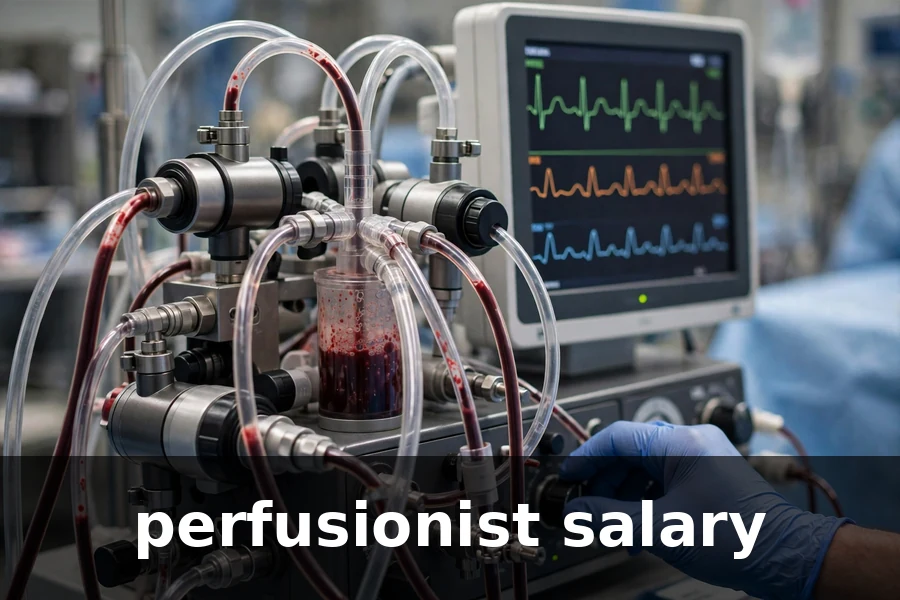
A perfusionist operates the cardiopulmonary bypass machine, commonly called the heart-lung machine, during cardiac surgery. The machine temporarily takes over the work of the heart and lungs, pumping and oxygenating the patient’s blood while the surgeon operates on a still, bloodless field.
The role goes beyond switching a machine on. Perfusionists select and prime the circuit, monitor blood gases, temperature, and flow rates throughout the case, administer medications through the circuit when directed, and respond instantly if anything changes. They also support other procedures, such as extracorporeal membrane oxygenation (ECMO) for critically ill patients. It is high stakes work where a small error can have serious consequences, which is part of why hospitals pay a premium for it.
Pay by Experience Level
The perfusionist salary curve rises steeply in the early years and then levels off, according to PayScale total compensation data. New graduates start well paid by most standards, but experienced perfusionists earn substantially more.
| Experience level | Typical total compensation |
|---|---|
| Under 1 year | About $113,677 |
| 1 to 4 years | About $151,819 |
| Late career, with surgery skills | About $160,438 average base |
The jump between the first year and the 1 to 4 year band is striking: nearly $38,000. That reflects how quickly a new perfusionist becomes independently useful. Once certified and trusted to run complex cases alone, including on-call coverage, their value to a cardiac program rises sharply. Late-career pay grows more slowly, since the role has a fairly flat senior ladder unless the perfusionist moves into a chief or management position.
Why Pay Figures Differ by Source and Year
Why does perfusionist salary data vary so much between sources? The main reason is that different surveys measure different groups at different times.
PayScale 2026 reflects self-reported pay from individual perfusionists in recent years, and it separates base pay from total pay, which includes bonuses and overtime. AmSECT, the American Society of ExtraCorporeal Technology, ran its Perfusion Compensation and Benefits Survey in 2022. It is the specialist survey of the profession, but it is older, and its respondents skew toward established, full-time perfusionists in hospital programs, which helps explain its higher median base of $165,000 and average total compensation of about $181,000. Its 25th to 75th percentile range of about $140,000 to $185,000 shows that even within that survey, the middle half of the field spans $45,000.
There is also an important gap in official data: the BLS has no dedicated occupational code for perfusionists, so they are grouped under broader healthcare codes. That means you will not find a single official BLS median for this role, and any article that quotes one is either mislabeling a broader category or inventing a figure. For perfusion, specialist surveys and salary platforms are the honest sources, and they should be named as such.
Call Pay, Overtime, and Bonuses
Base pay tells only part of the story in perfusion. Cardiac surgery does not keep office hours, and perfusionists take call, covering nights, weekends, and emergencies. Call pay, overtime, and bonuses can add a meaningful amount on top of base salary.
PayScale reports bonuses in a range of about $1,000 to $20,000, a wide spread that reflects how differently programs structure extra pay. Some hospitals pay a flat call stipend, others pay per case or per hour on call, and some roll call into a higher base salary. When comparing job offers, the total package matters more than the base figure alone: two offers with the same base salary can differ by $20,000 or more once call and bonus structures are included.
Certification and the Training Path
Becoming a perfusionist takes commitment. The standard path is a bachelor’s degree followed by an accredited perfusion education program and extensive clinical training, typically 4 to 6 years in total. The key credential is Certified Clinical Perfusionist (CCP), awarded by the American Board of Cardiovascular Perfusion after completing an accredited program, clinical cases, and a board examination.
Certification has a direct impact on pay. Most hospital cardiac programs require or strongly prefer CCP status, and certified perfusionists qualify for the independent, on-call roles that carry the highest compensation. Students and new graduates working toward certification earn at the lower end of the scale, which matches the under-1-year figure of about $113,677. For readers weighing shorter healthcare training routes, our phlebotomist pay guide shows how a much shorter program compares on pay and training time.
A Note on a Commonly Confused Job Title
One figure sometimes appears in search results and causes confusion: a job-board average of about $73,580 for a “perfusion technologist.” That is a different, lower-skilled job title, not perfusionist pay, and it should not be quoted as what perfusionists earn. Perfusion technologists typically assist with equipment preparation and support tasks rather than independently running cardiopulmonary bypass. Mixing the two titles understates perfusionist pay by more than half, so check the exact title whenever you compare figures.
Frequently Asked Questions
What is the average perfusionist salary in 2026?
PayScale 2026 puts average base pay at about $157,906, with a base range of $122,000 to $206,000 and total pay up to about $210,000. The AmSECT 2022 specialist survey reported a higher median base of $165,000 and average total compensation of about $181,000. A planning range of $150,000 to $180,000 covers most full-time roles.
How much do entry-level perfusionists make?
PayScale reports total compensation of about $113,677 for perfusionists with under one year of experience. Pay rises quickly, reaching about $151,819 in the 1 to 4 year band.
Does the BLS publish pay data for this role?
No. The BLS has no dedicated perfusionist code, so perfusionists are grouped under broader healthcare categories. There is no single official BLS median for this role.
How long does it take to become a perfusionist?
Typically 4 to 6 years in total: a bachelor’s degree plus an accredited perfusion program and clinical training, followed by board certification as a Certified Clinical Perfusionist (CCP).
Do perfusionists earn bonuses?
Often, yes. PayScale reports bonuses ranging from about $1,000 to $20,000, and call pay and overtime can add further amounts depending on the hospital’s structure.
Conclusion
In short, the perfusionist salary in 2026 sits firmly in six-figure territory, with most full-time practitioners earning somewhere between $150,000 and $180,000 in total compensation. Experience is the biggest lever early on, certification unlocks the best roles, and call and bonus structures can swing total pay by tens of thousands. It is a long training path for a small, high-responsibility field, but for those who complete it, the financial reward is among the strongest in allied healthcare.