

Pharmacy Tech Salary 2026: US Median Pay, Hourly Rates & State Breakdown
Walk into almost any pharmacy in America and you will find a pharmacy technician doing much of the hands-on work. They count tablets, label bottles, manage inventory, answer patient questions, and keep the pharmacist free to focus on clinical decisions. It is steady, skilled work, and it pays better than many people assume.
If you are researching a pharmacy tech salary in 2026, the headline number is encouraging, but it is only part of the story. Where you work, how much experience you hold, and whether you carry a certification can move your pay by thousands of dollars a year. This guide breaks down the latest official figures, state by state and employer by employer, so you can see where you stand and how to earn more.
Pay at a Glance
The most reliable pay data in the United States comes from the Bureau of Labor Statistics (BLS) Occupational Employment and Wage Statistics program. Its May 2025 release, the latest available for 2026 planning, puts pharmacy technicians in a clear middle band of healthcare support pay: solid, dependable, and well above minimum wage work, though far below pharmacist earnings.
| Measure | Figure |
|---|---|
| Median annual pay | $45,750 |
| Median hourly pay | $22.00 |
| Mean (average) annual pay | $46,620 |
| Estimated employment | About 471,680 |
| Approximate monthly equivalent of the median | About $3,813 |
Two notes on those numbers matter. First, the monthly figure of about $3,813 is simply the annual median divided by twelve. It is an approximate monthly equivalent, not take-home pay, since taxes, benefits, and deductions will change what lands in your bank account. Second, the median and the mean sit close together here, which tells you pay is fairly evenly spread rather than skewed by a few very high earners.
Hourly Pay: What Pharmacy Technicians Earn Per Hour
The median hourly rate of $22.00 per hour is the figure most job seekers should anchor on. Half of all pharmacy technicians earn more than this, and half earn less. At full-time hours, that works out to roughly $880 per week before taxes.
Hourly pay is where experience shows up fastest. New technicians often start near $17 to $18 per hour, while experienced, certified technicians in hospitals or specialty settings can push past $28 per hour. Shift differentials add more: evening, overnight, and weekend shifts in hospitals commonly pay a premium on top of the base rate.
Pay by Experience Level
Calibrated against the BLS base, pay tiers for pharmacy technicians in 2026 look roughly like this. Treat these as estimates, not official BLS cutoffs, since the BLS publishes medians rather than a formal entry-to-senior ladder.
| Experience level | Estimated annual pay |
|---|---|
| Entry level (new to the role) | Around $34,900 |
| Mid-career (a few years in, certified) | Near the $45,750 median |
| Senior (experienced, specialized) | Around $60,200 |
| Top earners | Around $66,200 |
The jump from entry to senior is large, and certification is usually what drives it. A technician who starts in a retail chain, earns the Certified Pharmacy Technician (CPhT) credential, and moves into a hospital or specialty pharmacy can realistically double their starting pay over several years.
Highest and Lowest Paying States
The national pharmacy tech salary average hides wide state gaps, and location is one of the biggest single factors in what you earn. The BLS May 2025 state figures show a spread of more than $50,000 between the top and bottom of the list.
| State or district | Median annual pay |
|---|---|
| Washington DC | $91,540 |
| Massachusetts | $63,590 |
| Washington state | $62,990 |
| New York | $59,670 |
| California | $58,240 |
| Mississippi (lowest) | $40,120 |
Washington DC tops the list by a wide margin, which reflects its concentration of federal and large hospital employers. Massachusetts and Washington state follow, both with strong hospital systems and higher costs of living. At the other end, Mississippi sits lowest at $40,120. Before relocating for pay, remember that living costs matter too: a higher nominal wage in an expensive city does not always mean more money left over at the end of the month.
Pay by Employer Type
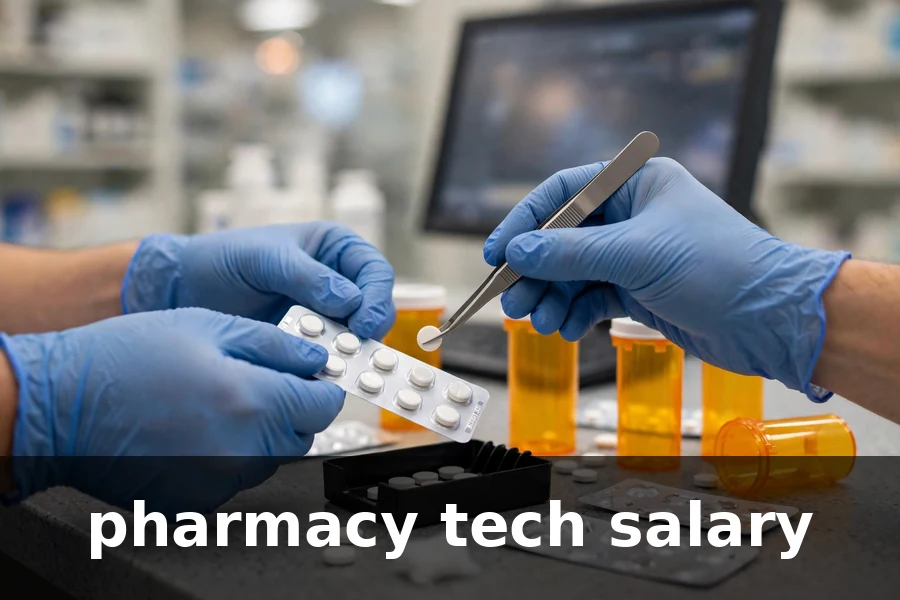
Where you work matters almost as much as where you live. Employer type shifts a pharmacy tech salary more than most newcomers expect, and the BLS data makes the pattern clear.
| Employer type | Median annual pay |
|---|---|
| Ambulatory healthcare services | About $49,920 |
| Hospitals | About $49,310 |
| Pharmacies and drug retailers | About $37,900 |
Retail pharmacies employ the largest share of technicians, but they pay the least on median. Hospitals and ambulatory care settings pay roughly $11,000 to $12,000 more per year, and they often offer better shift differentials and benefits. For many technicians, moving from retail to hospital work is the single biggest pay raise available without changing careers.
Why ZipRecruiter Shows a Lower Number
If you search job boards, you may see a lower figure. ZipRecruiter reported in October 2026 an average of about $40,074 per year for pharmacy technicians. That is not a contradiction to hide, and it does not mean the BLS is wrong.
The two sources measure different things. The BLS median comes from a large survey of employers and covers the full occupation, including experienced hospital technicians. A job-board average reflects the jobs actually posted on that platform, which skew toward entry-level retail openings. Averages also get pulled down by a large number of lower-paid postings, while a median simply marks the middle worker. When comparing figures, always check whether you are looking at a median or an average, and whose jobs are in the sample.
Certification, Training, and Job Outlook
Most pharmacy technicians enter the field through a certificate program, which typically takes under a year, though some learn on the job. The key credential is the Certified Pharmacy Technician (CPhT) designation from the Pharmacy Technician Certification Board (PTCB). Many states also require registration or licensure, so check your own state board of pharmacy for exact rules.
Certification pays. Employers use it as a screening signal, hospitals often require it, and certified technicians are first in line for senior and specialty roles. If you are comparing healthcare support careers, our phlebotomist pay guide shows a similar pattern, where certification and setting drive much of the pay gap.
The job outlook is steady rather than explosive. BLS-based reporting puts growth at about 5 to 7 percent over the decade, roughly in line with the average for all occupations. Demand is supported by an aging population, more prescriptions, and the expansion of pharmacy services into clinics and outpatient settings. It is not a gold rush, but it is a dependable career with real room to grow.
How to Raise Your Pay as a Pharmacy Technician
If your current pay sits below the median, a few moves reliably help. First, get certified if you are not already: the CPhT is the most widely recognized credential and opens hospital doors. Second, consider a hospital or specialty pharmacy role, where medians run well above retail. Third, build skills in sterile compounding, chemotherapy preparation, or inventory management, since specialty skills command premiums. Fourth, ask about shift differentials: nights and weekends can add several dollars per hour. Finally, keep an eye on state pay tables if you are open to moving, since the same job can pay $20,000 more across a state line.
Frequently Asked Questions
What is the average pharmacy tech salary in 2026?
Using the BLS May 2025 data, the median is $45,750 per year, or $22.00 per hour, with a mean of $46,620. Job-board averages run lower, around $40,074 on ZipRecruiter, because they reflect posted openings rather than the whole workforce.
How much do pharmacy technicians make per month?
At the median, the approximate monthly equivalent is about $3,813 before taxes and deductions. Actual take-home pay will be lower after tax, and it will vary with hours, overtime, and shift differentials.
Which state pays pharmacy technicians the most?
Washington DC, at a median of $91,540 per year. Among states, Massachusetts leads at $63,590, followed by Washington state at $62,990.
Do hospitals pay pharmacy technicians more than retail pharmacies?
Yes, on median. Hospitals pay about $49,310 compared with about $37,900 in pharmacies and drug retailers, a gap of roughly $11,400 per year.
Is pharmacy technician a good career in 2026?
For someone who wants healthcare work without years of schooling, yes. Training is short, certification is affordable, demand is steady at 5 to 7 percent growth, and experienced technicians in hospitals can earn $60,000 or more.
Conclusion
Taken together, the pharmacy tech salary picture for 2026 is solid and straightforward. The national median of $45,750, or $22.00 per hour, gives new entrants a realistic target, while state, employer, and certification differences explain why two technicians can earn very different amounts. The fastest route to higher pay is well marked: get certified, move toward hospital or ambulatory care work, and build a specialty skill. Do those three things, and the upper tiers of this field are well within reach.