BCBA Salary 2026: Average Pay, Hourly Rates & Career Growth
If you are thinking about a career in applied behavior analysis, one question probably comes first: how much does a BCBA actually earn? BCBA stands for Board Certified Behavior Analyst, a master’s level professional who designs and oversees behavior intervention programs, most often for children and adults with autism and other developmental needs. It is skilled, demanding work, and in 2026 the pay reflects that. Demand for these professionals remains strong across the United States, because insurance coverage for autism services has expanded and schools and clinics are still hiring.
The short answer is that most BCBAs in the US earn somewhere between $75,000 and $89,000 a year, depending on which salary source you check and where they work. Newly certified analysts usually start lower, experienced analysts and clinical directors earn considerably more, and hourly contractors can bill at much higher rates than salaried staff. This guide breaks down the 2026 numbers by experience, state, and work setting, explains the certification path, and looks at what it realistically takes to reach six figures.
BCBA Salary at a Glance in 2026
Before we get into the detail, here is the quick picture for 2026. The figures below combine job posting data from ZipRecruiter and similar aggregators with industry salary guides, because the US Bureau of Labor Statistics does not publish a BCBA only salary series. That matters, and it explains why different websites show different averages. One source may report employer posted pay, another may report employee reported pay, and both can be right for their own sample.
| Measure | Typical 2026 Figure |
|---|---|
| Average annual salary | $75,000 to $89,000 |
| Typical hourly rate (salaried) | $36 to $43 per hour |
| Typical hourly rate (contractor) | $65 to $90 per hour |
| Entry level annual pay | $55,000 to $70,000 |
| Experienced annual pay | $80,000 to $100,000 |
| Clinical director annual pay | $95,000 to $130,000 or more |
| Top earners (private practice owners) | $150,000 or more |
What Does a BCBA Do?
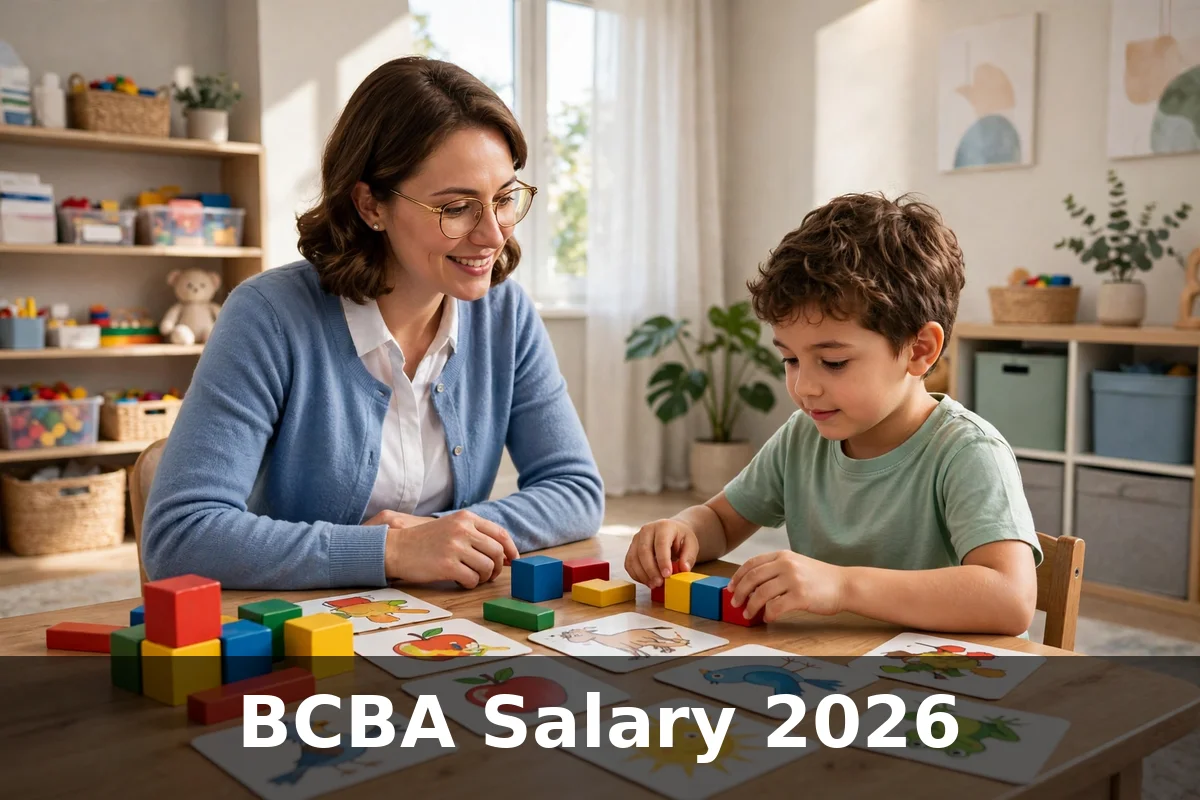
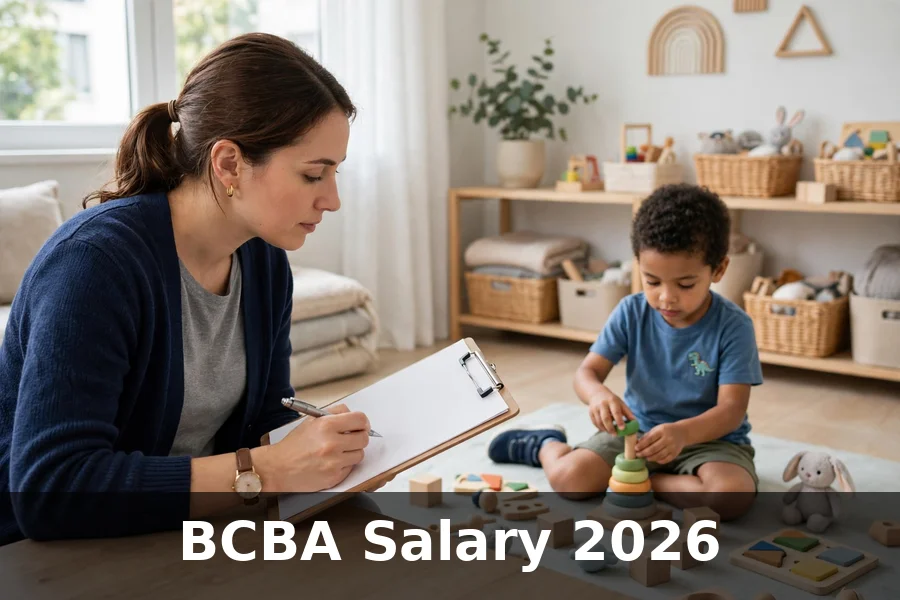
A BCBA assesses behavior, designs individualized intervention plans, and supervises the team that delivers those plans day to day. In practice, that usually means conducting functional behavior assessments, writing goals that families and schools can actually measure, training Registered Behavior Technicians (RBTs) and other staff, reviewing data every week, and adjusting the plan when progress stalls. Many BCBAs also coach parents and caregivers, because the skills a child learns in a clinic need to work at home and at school too.
Average BCBA Salary in 2026
So what is the average BCBA salary in 2026, in plain numbers? Job market data puts the national average in the high $70,000s to high $80,000s. ZipRecruiter data cited in 2025 salary guides reports an average around $89,075 a year for BCBAs, with a typical range of about $74,000 to $90,500 and top earners reaching around $132,500. Other industry guides report a median closer to $75,000, with a 10th percentile near $52,000 and a 90th percentile near $105,000. Both pictures are useful. The higher figure tends to reflect current job postings in competitive markets, while the lower median reflects a broader mix of employers, including schools and nonprofits.
For a realistic planning figure, most new BCBAs should expect to land somewhere in the $65,000 to $85,000 range in their first few years, and to move past $90,000 as they build a caseload, take on supervision, and prove they can run a program well. If a posting promises far more than that for a brand new BCBA with no supervision duties, read the fine print. It may be a contractor rate with no benefits, or a role that expects a very heavy billable hours target.
BCBA Salary by Experience Level
Experience is the single most reliable predictor of BCBA pay after location. A newly certified analyst is still learning how to manage a caseload, handle difficult cases, and supervise technicians. A senior analyst, by contrast, can run a clinic, mentor a team, and keep clients with complex needs on track. Employers pay for that difference.
| Experience Level | Annual Salary Range | What the Role Usually Involves |
|---|---|---|
| New BCBA (0 to 1 year) | $55,000 to $65,000 | Building a caseload, learning supervision |
| Early career (2 to 4 years) | $68,000 to $80,000 | Full caseload, supervising RBTs |
| Experienced (5 to 10 years) | $80,000 to $100,000 | Complex cases, program leadership |
| Senior or clinical director (10+ years) | $95,000 to $130,000 or more | Leading a clinic or region, supervising other BCBAs |
The jump from early career to experienced is where the money really moves. Once you can supervise several technicians, handle assessments independently, and keep a program running without constant oversight, you become much harder to replace. That is also the point where bonuses, productivity pay, and leadership roles start to appear in offers.
BCBA Salary by State
Where you live changes BCBA pay more than almost anything else. States with a high cost of living, strong insurance mandates for autism services, and a shortage of certified analysts tend to pay the most in nominal dollars. That does not always mean they leave you with the most money after rent and taxes, so compare the salary with the cost of living before you move for a raise.
| State | Typical Median or Average | Notes |
|---|---|---|
| New Jersey | $92,000 to $98,000 | Among the highest paying states in most surveys |
| California | $89,500 to $95,000 | Very high demand, but very high housing costs |
| Massachusetts | $85,000 to $86,000 | Strong healthcare and education sectors |
| Connecticut | $84,500 | Smaller market, solid pay |
| New York | $83,000 to $97,000 | New York City metro pays above the state figure |
| Washington | $80,500 to $100,000 | High end reflects recent job posting data |
| Maryland | $79,000 to $82,000 | Benefits from the Washington DC metro market |
| Virginia | $76,500 to $80,000 | Northern Virginia pays above the state median |
| Texas | $72,000 to $75,000 | Large market, lower cost of living than coastal states |
| Florida | $68,500 to $72,000 | Large market, pay below the national average |
Different salary sources rank the top states slightly differently, and that is normal. One survey may put Washington or the District of Columbia at the top based on recent postings, while another puts New Jersey or California first based on reported pay. The consistent message is the same: the Northeast, California, and the Pacific Northwest pay the most, while large Southern markets like Texas and Florida pay less in nominal terms but often offer a lower cost of living. Cities matter too. A BCBA in Berkeley, Redwood City, Boston, Seattle, or New York City will often earn well above their state average.
BCBA Salary by Work Setting
Your employer type shapes your pay almost as much as your state does. Private clinics and ABA companies often pay more than schools, but schools often offer better job security, summers off, and pension benefits. Home based work can offer flexibility, but it also means travel time and a less predictable schedule.
| Work Setting | Typical Annual Range | Trade Offs |
|---|---|---|
| Private ABA clinic | $70,000 to $110,000 | Higher pay, productivity expectations |
| Private practice (owner) | $100,000 to $200,000 or more | Highest ceiling, highest risk and admin load |
| Hospital system | $68,000 to $105,000 | Strong benefits, structured environment |
| Public school | $60,000 to $85,000 | Great benefits and security, lower base pay |
| Home based agency | $65,000 to $85,000 | Flexible, travel heavy |
| Telehealth | $65,000 to $90,000 | Remote work, depends on supervision model |
BCBA Hourly Rate: Salaried vs Contractor
One of the most confusing parts of BCBA pay is the gap between salaried hourly rates and contractor hourly rates. A salaried BCBA earning $85,000 a year works out to roughly $41 an hour on a standard 40 hour week. A contractor, by contrast, may be offered $65 to $90 an hour, with a national median around $75 an hour in recent posting data. That contractor rate looks much better until you remember what it does not include.
Contractors usually get no paid time off, no health insurance, no retirement match, and no paid time for assessments, report writing, and supervision that cannot be billed. They also pay self employment taxes. A salaried BCBA gets benefits, paid leave, and a steady paycheck even when a client cancels. Neither model is automatically better. Contractors who can keep a full, steady caseload and manage their own taxes often come out ahead. Salaried staff who value stability and benefits often prefer the lower headline rate. Before you accept a high hourly offer, ask how many hours are actually billable, who pays for cancellations, and whether non billable work is paid at all.
Benefits and Total Compensation
Base salary is only part of what a BCBA earns. A good benefits package can be worth $15,000 to $25,000 a year on top of salary, and it is worth comparing carefully when you weigh two offers. Common benefits for BCBAs include health, dental, and vision insurance, a 401(k) with an employer match, paid time off and holidays, and paid continuing education units (CEUs) to maintain certification.
How to Become a BCBA
Becoming a BCBA takes time and commitment, which is one reason the pay is solid. The path is set by the Behavior Analyst Certification Board (BACB), the body that awards the credential. In broad terms, you need a master’s degree in behavior analysis, psychology, education, or a related field, completion of the required graduate coursework in behavior analysis, supervised fieldwork experience, and a passing score on the BCBA exam.
Supervised fieldwork usually means 1,500 to 2,000 hours of supervised practice, depending on the supervision pathway you choose. That fieldwork is where you learn the job for real: running assessments, writing plans, supervising technicians, and meeting with families under the guidance of an experienced BCBA. After you pass the exam and earn the credential, you must keep it current with continuing education and by following the BACB ethics code. Many BCBAs also need a state license, and licensing rules vary by state, so check the rules where you plan to work.
Career Growth and Six Figure Potential
Can a BCBA earn six figures? Yes, but it usually takes experience, leadership, or ownership. The most common routes to $100,000 and beyond are becoming a clinical director, supervising multiple BCBAs and programs; opening your own ABA practice and building a team of technicians; specializing in a high need area such as severe behavior, feeding, or organizational behavior management; or taking on travel or contract roles in shortage areas, where weekly pay of $1,700 to $2,500 has been reported for back to back assignments.
A doctoral level credential, the BCBA-D, can also help, particularly for university teaching, research, and senior leadership roles, with doctoral holders often reported in the $90,000 to $130,000 range. None of these paths is guaranteed, and none happens in year one. What is realistic is steady growth: a BCBA who stays in the field, keeps learning, and takes on more responsibility can reasonably expect to move from the $60,000s into the $90,000s and beyond over five to ten years. Like other healthcare careers, pay rises with responsibility, and comparing roles across the sector, for example phlebotomist salary levels in entry level clinical work, shows how much the master’s degree and certification premium matters here.
How to Increase Your BCBA Salary
If you are already a BCBA and want a raise, start with the levers that employers actually reward. First, take on supervision. A BCBA who supervises several technicians well is worth more than one who only carries their own caseload. Second, specialize. Expertise in early intervention, severe behavior, or a niche population makes you harder to replace. Third, negotiate with data. Bring local job postings, your billable hours, your client outcomes, and your supervision load to the conversation, not just a feeling that you deserve more.
FAQs About BCBA Salary
How much does a BCBA make per hour in 2026?
Salaried BCBAs typically earn about $36 to $43 an hour, based on annual pay of $75,000 to $89,000. Independent contractors are often offered $65 to $90 an hour, but that rate usually comes without benefits or paid non billable time, so the two figures are not directly comparable.
What is the starting salary for a BCBA?
Most newly certified BCBAs start between $55,000 and $70,000 a year, with some clinic roles starting higher in expensive coastal markets. Pay usually rises quickly in the first few years as you build a full caseload and take on supervision.
Which state pays BCBAs the most?
New Jersey, California, Massachusetts, Washington, and New York consistently rank near the top, with typical figures from about $83,000 to $98,000 depending on the source. Remember to adjust for cost of living: a higher salary in California or New York may not stretch as far as a lower salary in Texas or Tennessee.
Do school BCBAs earn less than clinic BCBAs?
Usually yes, in base salary. School BCBAs often earn $60,000 to $85,000, while clinic BCBAs often earn $70,000 to $110,000. Schools tend to make up part of the gap with pensions, paid holidays, and a school year schedule.
Is BCBA a good career financially?
For most people, yes. It requires a master’s degree and serious supervised training, but it offers stable demand, pay well above the national median for all workers, and a clear path to leadership and six figures. It is also meaningful work, which matters when the days are long and the cases are hard.
How long does it take to become a BCBA?
Most people take two to three years after a bachelor’s degree, including a master’s degree and 1,500 to 2,000 hours of supervised fieldwork, followed by the BACB exam. Some people take longer if they study part time or complete fieldwork alongside work.
Conclusion
BCBA salary in 2026 sits in a strong, realistic middle ground: an average of roughly $75,000 to $89,000 a year, entry level pay in the $55,000 to $70,000 range, experienced pay of $80,000 to $100,000, and a genuine path to $100,000 and beyond through leadership, specialization, or private practice. Location and setting matter a great deal, and the headline hourly rate for contractors should never be compared directly with a salaried rate that includes benefits.
If you are choosing this career, the financial case is sound, but go in with your eyes open. The training is long, the work is demanding, and the biggest raises come with experience and responsibility, not with the certificate alone. If you are already a BCBA and feel underpaid, the data in this guide gives you a solid starting point for your next conversation: know your local market, know your supervision load, and negotiate on the full package, not just the salary line. The demand for good behavior analysts is not going away, and good analysts who can prove their impact are in a strong position to ask for what they are worth.